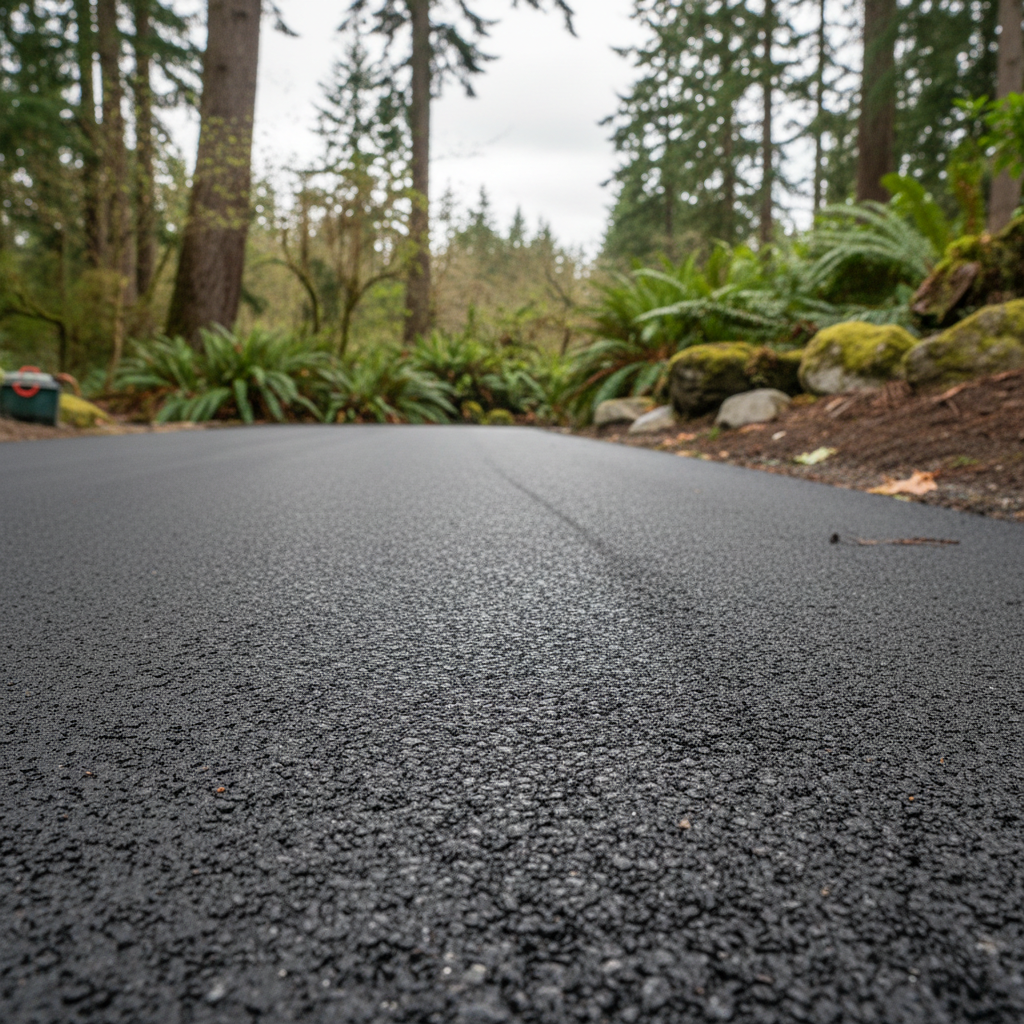
You've probably heard me talk about asphalt milling before, especially if you're looking for a cost-effective way to fix up your driveway or private road. It's a smart solution for a lot of folks here in Kitsap County. But I get it, it's not something most people deal with every day, so there are always questions. I'm not here to sell you anything, just to clear up some confusion based on what I hear from homeowners like you, right here in Bremerton. Let's get into it.
What exactly is asphalt milling, anyway?
Alright, let's start with the basics. Asphalt milling, sometimes called cold planing or cold milling, is basically grinding off the top layer of your existing asphalt surface. We use a specialized machine with a big rotating drum that has a bunch of cutting teeth. It shaves off a precise amount of asphalt, usually anywhere from an inch to several inches deep, depending on the condition of your pavement and what we're trying to achieve. It's not a full tear-out; it's more like giving your old driveway a fresh haircut before putting on a new layer of asphalt. The material we grind up, called millings, can often be reused, which is a big plus for the environment and your wallet.
When is milling a better option than just paving over my old driveway?
That's a really common question, and it's a good one. Paving directly over an old driveway, what we call an overlay, can be tempting because it seems simpler. But it's not always the best move. If your existing asphalt has significant structural issues — I'm talking about deep cracks, potholes, or areas where water is pooling and causing subgrade problems — just overlaying it is like putting a band-aid on a broken leg. Those underlying issues will eventually telegraph right through your new asphalt. Milling, on the other hand, removes that compromised top layer, letting us address any issues with the base if needed, and then we put down a fresh, stable surface. It also helps with elevation. If your driveway is already high, maybe it's too close to your garage door or it's causing drainage issues into your yard, milling lets us reduce that elevation before adding new asphalt. You don't want your new driveway to be higher than your existing garage floor, right?
Can I just use the asphalt millings as my new driveway surface?
You definitely can, and a lot of people do, especially for private roads, longer driveways, or even parking areas where a perfectly smooth, blacktop finish isn't the top priority. When we mill, we get these small, angular pieces of asphalt and aggregate. They're not a fine powder, but they're not big chunks either. If you spread them out, compact them well, and let them sit for a bit, they'll actually bind together pretty tightly, especially after some sun and rain. The residual tar in the old asphalt helps them fuse. It creates a very durable, low-maintenance, and permeable surface. It's not as smooth as fresh hot mix, and it won't have that deep black color, but it's incredibly cost-effective and holds up great to our Bremerton weather, especially with all the rain we get. I've seen plenty of driveways in places like the Manette neighborhood that use millings effectively.
How long does a milled and repaved driveway last compared to a brand-new one?
When done right, a driveway that's been milled and then repaved with a new layer of hot mix asphalt can last just as long, if not longer, than a brand-new construction. Think about it: we've removed the damaged top layer, potentially fixed any base issues, and then laid down fresh, high-quality asphalt. You're getting a renewed surface on a solid foundation. A typical lifespan for a well-maintained asphalt driveway, whether it's new or milled and repaved, is 15-20 years, sometimes more. It all comes down to proper installation, good drainage, and a little bit of maintenance like sealcoating every few years. Synergy Asphalt Bremerton always aims for that long-term durability.
Will milling affect my landscaping or property drainage?
We're very careful about that. When we're milling, the machine is precise, but it's still a big piece of equipment. We take precautions to protect any adjacent landscaping, irrigation systems, or structures. As for drainage, milling usually improves it! By removing the old, uneven surface, we're creating a clean slate. When we lay the new asphalt, we can ensure proper grading and slopes to direct water away from your home, garage, and foundation. This is a critical part of the job, especially here where we get so much rain. Good drainage prevents water from sitting on your pavement or seeping into your subgrade, which is what causes a lot of asphalt problems in the first place.
What happens to all the old asphalt that gets milled up?
That's one of the best parts about milling from an environmental and cost perspective. The material we mill off your driveway, those asphalt millings, are 100% recyclable. We don't just haul them off to a landfill. We take them to a processing facility where they can be crushed and reused in new asphalt mixes, or as I mentioned earlier, they can be used as a standalone aggregate for other projects. This significantly reduces waste and the demand for virgin materials, which is a win-win. It's a sustainable practice that we're proud to be a part of. It's good for your pocketbook and good for the planet.
How much does asphalt milling typically cost in Bremerton?
Alright, the million-dollar question, or rather, the few-thousand-dollar question. The cost of asphalt milling isn't a one-size-fits-all number because it depends on several factors: the total square footage of the area, the depth we need to mill, whether we're just milling or also repaving, and the accessibility of your property. Generally, milling is a more affordable option than a full tear-out and replacement because we're not removing the entire base layer, and the recycled material has value. If you're just using the millings as your final surface, it's even cheaper. My best advice is to get a quote tailored to your specific project. I'm happy to come out, take a look, and give you an honest assessment of what you're looking at. Don't go by online calculators; your driveway is unique.
Hopefully, that clears up some of the common questions you might have about asphalt milling. It's a solid, practical solution for a lot of worn-out driveways around Bremerton, and it's something I recommend often when it makes sense for the homeowner. If you've got more questions, or you're ready to talk about your specific driveway, just give us a call at Synergy Asphalt Bremerton. We're always here to help.